

excerpts
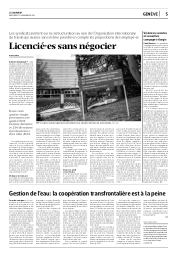
According to the unions, this is part of a reorganization that could jeopardize the ILO’s Geneva headquarters. There are plans to transfer positions to other countries, notably by establishing a service center.
Samir Yeddes, a representative of the Swiss Mission to international organizations, expressed deep concern regarding the current financial situation. He explained that the ongoing reform is structured around three pillars : strengthening field operations, consolidating administrative functions into a global service center, and increasing overall efficiency.
He noted that the Swiss Confederation’s offer to suspend the repayment of loans—amounting to 2.4 million francs—due in 2026 is contingent upon the headquarters remaining in Geneva. Discussions are currently underway to secure written commitments.
Consequently, the unions are struggling to assist the ILO Staff Union in ensuring that the organization’s management—at the very least with regard to staff residing in Switzerland—complies with the laws of the host country. This includes, in particular, regulations concerning collective redundancies (Articles 335d–k of the Swiss Code of Obligations), which require the employer to inform and consult with staff and to negotiate a social plan.
Furthermore, the representative of the Swiss Mission appears to be overlooking the statements made by Ambassador Valérie Berset Bircher before the Court in The Hague—during a public hearing held on Wednesday, October 8, 2025, at 10:00 a.m. at the Peace Palace—regarding the right to strike. -# Would the creation of an internal ILO tribunal, as provided for in Article 37, paragraph 2, of the ILO Constitution, not offer a swift, tripartite mechanism capable of promptly ruling on the International Labour Office’s (ILO) obligation to negotiate a social plan ?
- Should the appointment of its judges not be expedited, so that it may finally be acknowledged that institutions within the UN system—while not being sovereign states—are nonetheless bound to uphold the rules, Conventions, or Recommendations that they themselves advocate for those states ?
- And, above all, is it not time for Switzerland to ensure compliance with and the implementation of these standards across all organizations within the United Nations system ?
- Or, to put it more diplomatically, should Switzerland not engage with a majority of governments to remind them of the 2010 report by the Joint Inspection Unit 2010 and the need to follow up on its findings ?
excerpt from a Joint Inspection Unit report
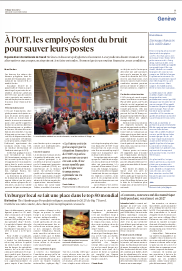
Recommendation 5
The General Assembly should request the Secretary-General to submit for its approval appropriate staff regulations that confirm the recognition of the right of United Nations staff to collective bargaining, as outlined in the annex to its resolution 128 (II). The Secretary-General and the heads of the secretariats of separately administered organs and programmes should apply to the staff of their respective entities the standards and principles derived from relevant ILO instruments—most notably the 1998 Declaration on Fundamental Principles and Rights at Work.